

Skip to content

New European AI assistant to make patient experiences actionable for care and health systems

2026-09-08

The Horizon Europe project ResPECT will connect patient voices, clinical decision support and health system intelligence across Europe

Millions of people living with breast cancer or depression experience physical, psychological, social and financial burdens that remain unseen or insufficiently addressed in routine care. Existing patient-reported outcome measures provide important information, but they often reduce complex experiences to numerical scores. At the same time, healthcare professionals face fragmented clinical data, increasing documentation demands and digital tools that are not always well integrated into care.

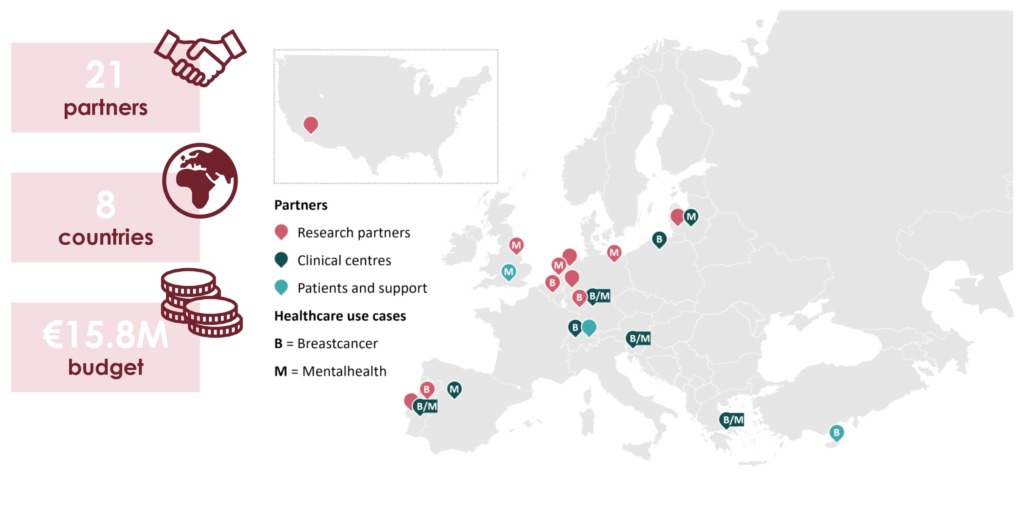
The new European research and innovation project ResPECT, Generative AI Assistant: A Paradigm Shift in Burden Assessment for Cancer and Mental Health Care, aims to change this. Funded under Horizon Europe’s GenAI4EU call for end user-driven applications of generative AI models in healthcare, the four-year project brings together 22 partners and will conduct clinical evaluation across eight European countries. ResPECT aims to develop a trustworthy, multilingual and GDPR-compliant Virtual Assistant consisting of two parts: a medical assistant aiming to support patients and medical professionals, and a policy assistant to support policy makers and health systems.
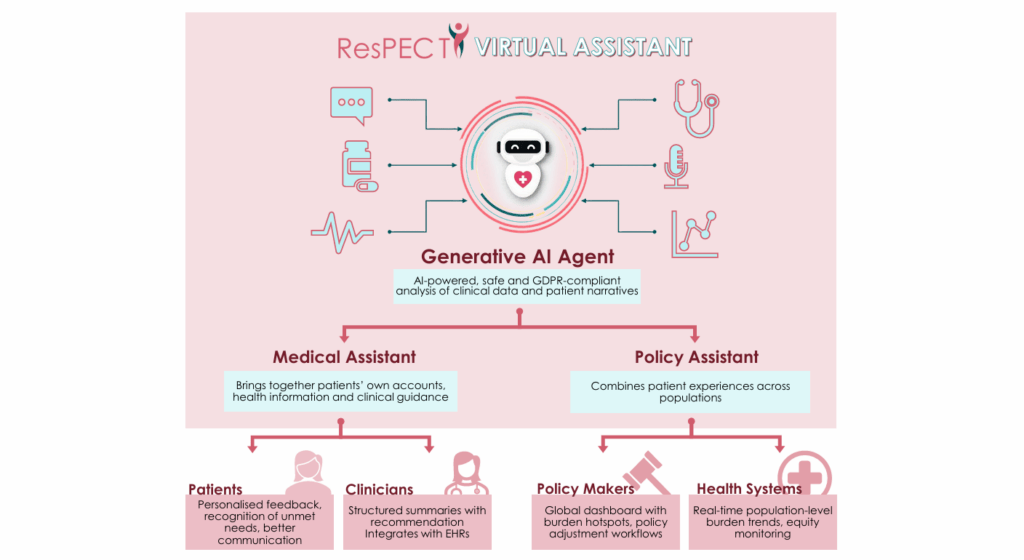

ResPECT press release infographic

The Medical Assistant will support individual care by combining patient-reported experiences with relevant clinical information and guideline-based knowledge. It aims to help patients describe their symptoms, concerns and needs in their own words, while providing healthcare professionals with concise, structured and clinically relevant summaries. It will reduce documentation and cognitive burden of health care professionals while supporting timely, evidence-based care for patients. The project will evaluate the solution in a multicentre randomised controlled trial involving patients with early-stage breast cancer or moderate-to-severe depression.

The Policy Assistant will focus on the health-system level. By aggregating structured information on patient experiences across populations, it aims to help identify unmet needs, burden patterns and potential gaps in care.

Equity-sensitive dashboards will support comparisons across regions, patient groups and healthcare systems, thereby informing benchmarking, resource allocation and more responsive health policy strategies across Europe.

The project is coordinated by Ruprecht Karl University Heidelberg. The consortium combines leading clinical centres, AI and digital health specialists, patient organisations, health economists, policy experts and internationally recognised methodological leaders. Its experts include the co-chairs of the Lancet Commission on Cancer and Health Systems, and Mental Health Effects of the COVID-19 Pandemic.

André Pfob

With ResPECT, we want to make patients’ lived experiences actionable for better care and smarter health systems across Europe.

André Pfob, ResPECT Project Coordinator

Ruprecht Karl University Heidelberg & Heidelberg University Hospital, Germany

ResPECT is also part of the GenAI4Health Cluster, which brings together European initiatives working on the responsible use of generative AI in medicine and healthcare. Through this collaboration, the project will contribute to broader European efforts to connect technical innovation, clinical implementation, patient-centred care, ethics, data protection and regulatory requirements.

By listening to patients’ experiences in their own words, rather than reducing them to tick-box surveys, ResPECT aims to capture the full breadth of what people are living through. The project hopes to turn these voices into clear, actionable insights for healthcare professionals and comparable evidence for policymakers, helping to shape more responsive, efficient and sustainable health systems across Europe.

ResPECT press release map